Gardeners Surbiton: Recycling and Sustainability for Greener Gardens
 As Gardeners Surbiton we are committed to creating an eco-friendly waste disposal area and a truly sustainable rubbish gardening area for every property we manage. Our approach blends practical on-site segregation, careful removal of bulky green waste and salvaging of reusable materials so that garden health and local waste targets move forward together. By integrating best practice from neighbouring boroughs and local recycling programmes, Surbiton gardeners are able to reduce landfill trips and increase reuse.
We have set an ambitious recycling percentage target for our operations: a minimum of 70% of all garden waste and on-site materials diverted from landfill by 2030. That figure includes composted green waste, diverted soils and root balls, reusable paving and salvaged timber. The target is aligned with local boroughs' approach to waste separation, where food, garden, glass and paper are commonly separated at source to maximise recyclable material streams and reduce contamination rates.
 To meet these goals our team uses an eco-first strategy when creating any eco-friendly waste disposal area or setting up a sustainable rubbish gardening area. We prioritise separation at source — placing bins for green waste, soil, clean timber, metals and inert materials — and we transport segregated loads to local transfer stations and recycling hubs. Where appropriate we opt for local transfer stations within Kingston and neighbouring boroughs to shorten haulage distances and minimise emissions from trucking.
We partner with several local charities and community groups to ensure useful materials are reused rather than disposed of. Surbiton gardening services often donate potted plants, surplus topsoil and usable timber to community gardens and conservation projects, and collaborate with charity re-use centres that accept clean wood, brick and garden furniture. These partnerships create circular benefits: community groups get low-cost materials and our gardeners reduce the amount of waste entering the skip stream.
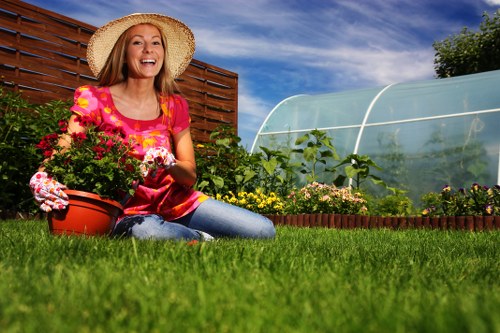 Practical recycling activities we commonly use include segregated green bins for clippings and hedge trimmings, composting of leaf litter and small prunings on-site where space allows, and sending larger volumes of green material to council garden-waste facilities. We also engage in soil reuse and screening to recover reusable topsoil for flowerbeds, reducing the need to import new soil. This complements the boroughs' mixed recycling systems where glass, cans and paper are collected separately.
Sustainable Equipment and Low-Carbon Logistics
Our fleet is being upgraded to low-carbon vans and lighter trailers to cut greenhouse gas emissions. We use route optimisation software and consolidated loads so that Surbiton gardeners and GS gardeners alike make fewer journeys while carrying more reusable material. Low-carbon vans (including electric and low-emission hybrid models) are now standard for local collections, and we pilot zero-emission transfers where local charging infrastructure permits.Practical Recycling Actions and Local Transfer Stations
Working with local transfer stations and civic recycling hubs helps us keep the footprint of garden clearance low. We make use of municipal transfer stations that accept segregated garden waste, inert soils and bulky green waste, and we prioritise facilities with anaerobic digestion or municipal composting to close the loop on organic materials. Our teams also collect and deliver clean inert materials and metals to authorised recycling centres to ensure proper processing.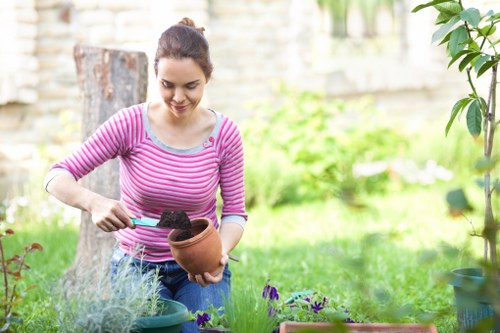 The benefits of a well-managed eco waste area or sustainable rubbish gardening area are wide-ranging:
- Reduced landfill: less tipping of organic and reusable material.
- Lower carbon emissions: through local transfer and low-carbon vans.
- Community reuse: surplus plants and materials returned to local charities.
 As part of our continuous improvement, we monitor diversion rates, contamination levels and vehicle emissions. Our target of a 70% recycling rate is supported by quarterly audits and collaborative work with borough recycling teams to keep up with evolving waste separation rules. We also provide clear on-site signage and labelled containers so that every gardener and client understands how materials will be separated and where they will be sent for processing.
To maintain momentum we train crews in waste identification and segregation, ensuring materials like treated timber are separated from clean timber, and soils are screened before reuse. Surbiton gardeners follow a practical hierarchy: reduce at source, reuse where possible, compost organic matter, recycle materials at authorised centres, and only as a last resort send to residual waste. This hierarchy mirrors the waste management practices promoted by local boroughs and national policy.
We continually expand our charity partnerships to include more community gardens, school projects and conservation trusts. These partnerships create channels for donating whole plants, reusable pots and salvageable materials, extending the life of resources that would otherwise be discarded. Gardeners Surbiton believe that connecting with local re-use outlets is an essential part of creating sustainable urban green spaces.
By combining an eco-friendly waste disposal area mindset, collaboration with local transfer stations, commitments to charity partnerships and investment in a low-carbon vehicle fleet, Gardeners Surbiton and Surbiton gardening services are pushing toward a greener future. Our strong, measurable target and practical steps mean every clearance, prune and soil move supports a sustainable rubbish gardening area model that benefits the community and protects the environment.

